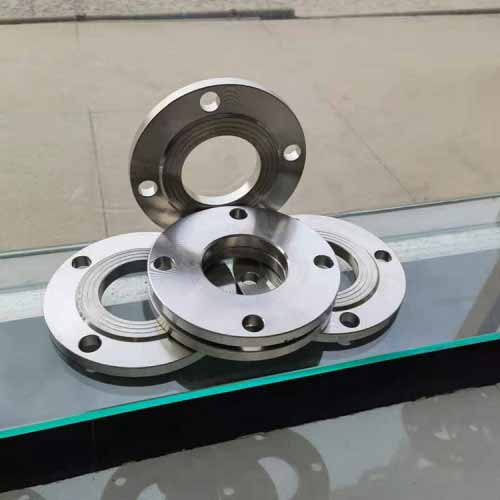
Product details description
Flanges are critical connectors in piping systems, providing strength,
accessibility, and leak-proof joints. Their standardization through ASME B16.5,
ANSI, and international specifications ensures global compatibility, safety, and
predictable performance across industries from oil and gas to chemical
processing.
ASME B16.5 is the dominant standard in North America for pipe flanges and
fittings, covering nominal pipe sizes from ? to 24 inches and pressure classes
150 to 2500. It specifies dimensions, materials (carbon steel, stainless steel,
alloys), facing types (raised face, flat face, ring-type joint), and marking
requirements. Compliance guarantees that flanges from different manufacturers
will mate correctly, reducing assembly errors and leaks.
ANSI classifications often refer to earlier standards that influenced ASME
B16.5, such as ANSI B16.1 for cast iron flanges. While ANSI itself no longer
issues independent flange standards, the term persists in referencing historical
pressure-temperature ratings and dimensional conventions. Understanding these
links helps interpret legacy drawings and equipment specifications.
International standards broaden global applicability. EN 1092-1 (Europe)
covers steel flanges with types including weld neck, blind, and lapped, using PN
(pressure nominal) ratings instead of class. JIS B2220 (Japan) specifies
dimensions and materials for steel pipe flanges, aligning with Asian industrial
practices. ISO 7005 harmonizes dimensions across regions, facilitating
cross-border trade and engineering.
Pressure-temperature ratings define service limits. Each class or PN rating
correlates with allowable stress values at given temperatures, ensuring flanges
withstand thermal and mechanical loads. For example, ASME B16.5 Class 150
permits lower pressure at high temperatures than at ambient, reflecting material
strength variation. Engineers must select flanges with adequate ratings for the
operating environment to prevent failure.
Material selection and facing compatibility complete the specification.
Matching flange material to pipeline media prevents corrosion, while facing type
ensures proper sealing—raised face for gasket compression, ring-type joint for
high-pressure hydrocarbon service. Traceability markings (material grade, class,
manufacturer) support quality control. By adhering to these comprehensive
standards, flange users achieve safe, reliable, and interchangeable piping
connections worldwide.
Previous article:
Weld Neck vs. Slip-On Flanges: A Performance and Cost Comparison
Next article:
Industrial Flange Sizing: Pipeline Diameter Matching and Flow Optimization