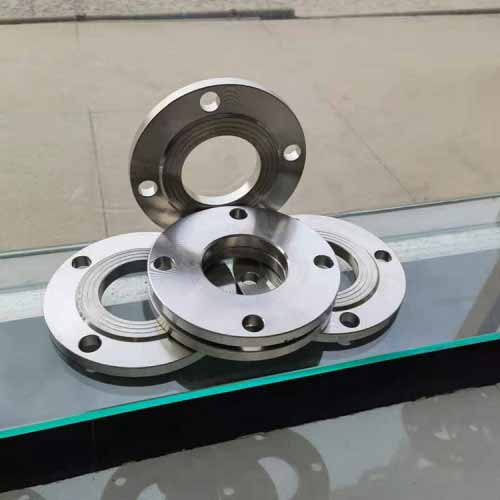
Product details description
Flange face types are critical design elements that determine sealing
performance, gasket compatibility, and bolt load distribution in piping systems
across oil & gas, chemical processing, power generation, and water treatment
industries. The three most common configurations—Raised Face (RF), Flat Face
(FF), and Ring-Type Joint (RTJ)—each serve distinct functional purposes based on
pressure ratings, fluid type, and operational environment. Selecting the
appropriate flange face ensures leak-free joints, minimizes maintenance
downtime, and extends system lifespan under varying thermal and mechanical
stresses.
Raised Face flanges feature a concentric, machined ridge around the bolt
circle that elevates the sealing surface above the flange’s main face. This
design concentrates bolt load onto the gasket, improving compression and seal
integrity, especially under high-pressure or high-temperature conditions. RF
flanges are standardized under ASME B16.5 and commonly used with spiral-wound,
ring joint, or full-face gaskets. Their raised profile also helps protect the
gasket from accidental damage during handling or installation. Due to their
versatility and reliability, RF flanges dominate general industrial applications
where moderate to high pressures are encountered.
Flat Face flanges, in contrast, have a sealing surface flush with the outer
edge of the flange, providing a wider bearing area for the gasket. They are
typically specified for low-pressure, non-hazardous services such as water lines
or air ducts, where full-face gaskets are required to distribute load evenly
across the entire flange face. FF flanges are incompatible with raised face
counterparts unless a special adapter or spacer is used, as mismatched faces can
lead to uneven gasket compression and leakage. Their simplicity makes them
economical for low-risk applications but limits their use in critical or
high-pressure systems.
Ring-Type Joint flanges utilize a groove machined into the flange face to
accommodate a metal ring gasket (often octagonal or oval cross-section),
creating a positive metal-to-metal seal resistant to extreme pressures and
temperatures. RTJ flanges are mandatory in high-pressure, high-temperature, or
toxic/hazardous fluid applications such as refinery reactors, offshore
pipelines, or nuclear facilities. The metal gasket deforms plastically under
bolt load, filling the groove and forming a hermetic seal that resists creep
relaxation and thermal cycling. While more expensive and requiring precise
machining, RTJ connections offer unmatched reliability in mission-critical
environments where failure is unacceptable.
Proper selection depends on system parameters including pressure class,
fluid compatibility, temperature range, and regulatory compliance. Engineers
must also consider ease of assembly/disassembly, gasket availability, and
long-term maintenance costs. Modern CAD modeling and finite element analysis
(FEA) tools aid in simulating bolt load distribution and predicting gasket
behavior under real-world conditions. As global standards harmonize and industry
demands shift toward higher safety margins, understanding the nuances of flange
face types remains fundamental to designing robust, leak-free piping
systems.
Previous article:
Industrial Flange Sizing: Pipeline Diameter Matching and Flow Optimization
Next article:
Flange Gasket Compatibility: Material Selection and Seal Performance Testing